

Salvador Dali
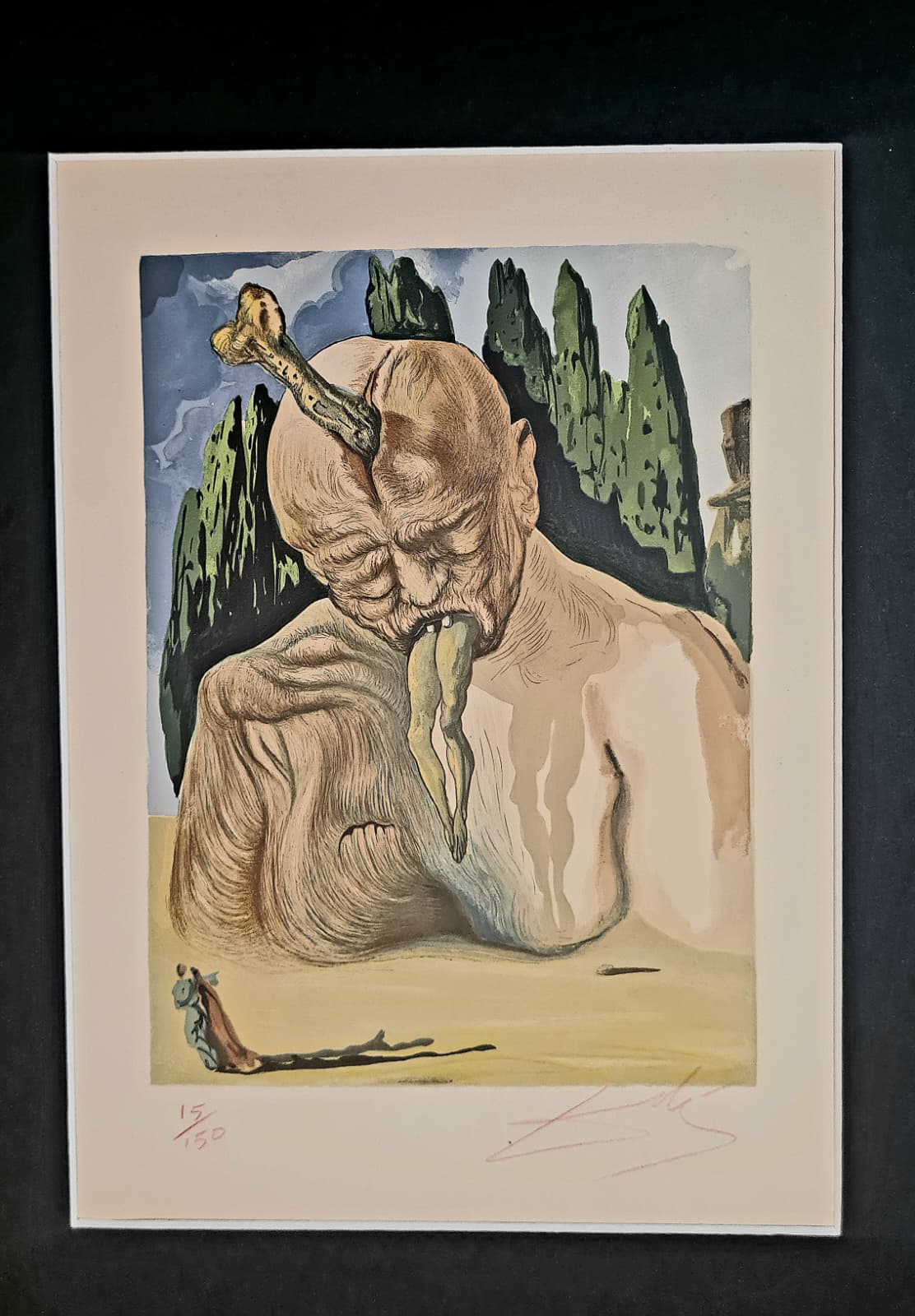
Salvador Dali - La Divina Commedia, Inferno Canto 34 (Lucifero)
Salvador Dali - La Divina Commedia, Inferno Canto 34 (Lucifero)
Impossibile caricare la disponibilità di ritiro
Artist: Salvador Dali
Portfolio: The Divine Comedy. The portfolio consists of 150 engravings based on original water colors by Dali painted between 1951-60.
Medium: Wood engraving on Rives, watermark
Edition number: 15/150
Edition size: The engravings were published as a French edition by two different editiors (5346 prints), an Italian edition (3188 prints) and later in 1974 a german edition (1000 prints). The engravings were published unsigned but a small number have later been hand-signed and numbered by Dali in crayon: red for Hell, purple for Purgatory and blue for Paradise, 150 of each.
Date: 1960-64
Image size: 24.5x18 cm
Sheet size: 33x26 cm
Signed: Hand-signed by the artist in Red Crayon (Hell)
Frame: Framed
Reference: Michel & Löpsinger pg 105, 1065; Albert Field, pg 196, Hell 34
About the work:
Dante Alighieri wrote his Commedia over a period o f years and completed it in the year o f his death. (The appellation “Divine” was added in the 15th century.) It is written in terza rima, a series of triplets of 10 or 11 syllables per line, the middle line rhyming with the first and third lines of the following triplet.
The poem consists o f 100 cantos describing a trip through the Afterlife, Vergil guiding Dante through Hell and Purgatory, and Beatrice through Paradise. Dante had been very active politically, and he peopled Hell and Purgatory not merely with sinners by types, but with named persons! To celebrate the 700th anniversary of his birth, the government of Italy planned to issue a special edition o f Divine Comedy. For this, from 1951 through 1960 Dali created 101 watercolors.
There was immediate opposition. Communists protested the “waste” of money that was needed for “better” purposes. And patriots objected to the work of Italy’s greatest poet being illustrated by a Spaniard.
In the end the government issued commemorative postage stamps!
Share